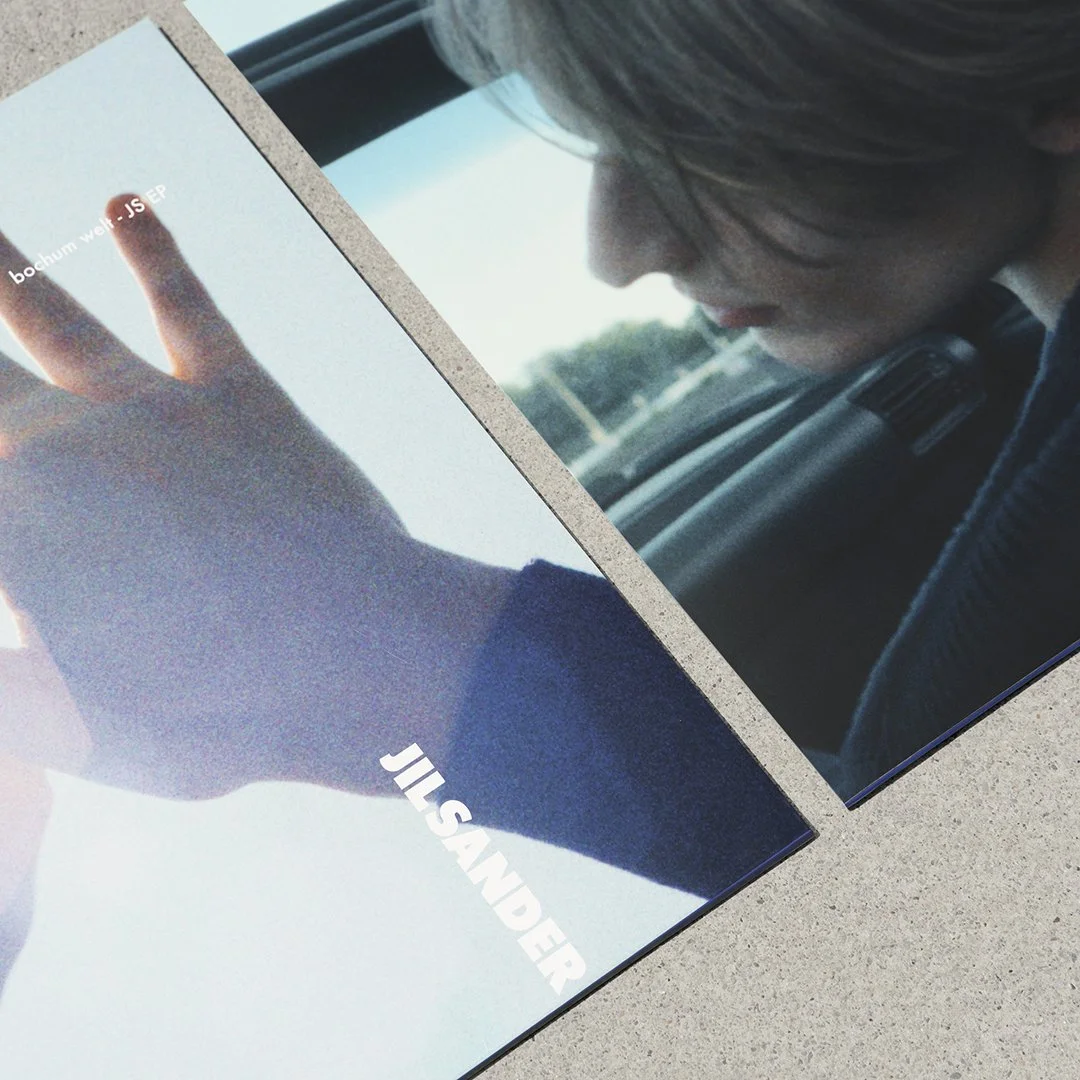
Structure of sound. In conversation with Gianluigi Di Costanzo, better known as his performing alias Bochum Welt, in anticipation of the vinyl reissue of his collaborative album with the Italo-Germanic luxury fashion house JIL SANDER.
Photos: JIL SANDER
This conversation is with Gianluigi Di Costanzo, the Italian electronic musician who works under the alias Bochum Welt. Across the span of more than three decades, Di Costanzo has produced a distinctive and continually evolving body of work, releasing music with CPU Records, Thomas Dolby’s Headspace and Beatnik Inc., and crafting albums such as Desktop Robotics (1997), Feelings on a Screen (1997), R.O.B. (2007), and Seafire (2019). The artist’s earliest releases found a home on the influential UK experimental imprint Rephlex Records, founded by Richard D. James (Aphex Twin) and Grant Wilson-Claridge. And his 1996 debut album for the label, Module 2, was a cult favourite among underground electronic music fans, with an enduring reputation that led to a much sought-after vinyl reissue in 2024. His latest project, JS (2025), marks a new chapter in the artists’ journey: a cross-disciplinary collaboration with the luxury fashion house JIL SANDER, guided by the brand’s newly appointed creative director, Simone Bellotti. Seldom appearing on camera, and rarely categorised by any one specific genre, Di Costanzo has demonstrated a timeless versatility reserved for very few artists. He moves fluidly from raw acid and techno to “braindance” electro, into more ambient, downtempo, and introspective electronic territories. With JS now prepared for its vinyl reissue, Bochum Welt’s catalogue reflects an artist at the very centre of the experimental music tradition, and a boundless pursuit of artistic innovation.

BI: When you look back at your early period. Your first tracks and experiments, to the Rephlex releases. What do you think you were searching for as an artist?
GDC: In the early days I was searching for a kind of emotional clarity, a way for sound to reveal something essential without saying too much. Working with Rephlex shaped that. I spent long periods in London, often living inside the label’s HQ, surrounded by people who were deeply curious and generous. That environment taught me that music could be both experimental and intimate, technical and human. I think I was searching for a voice that felt sincere, even when filtered through machines.
BI: And are there particular sources from those early years that continue to inform your work now?
GDC: Absolutely. The piano studies, the early German and British electronic scene, and the sense of introspection that came from growing up in Milan. Also the atmosphere at Rephlex which was playful, bold, and always very curious. It still shapes how I approach experimentation.
BI: You chose the name Bochum Welt to release your work. How do you relate to it now? And do Gianluigi the person, and Bochum Welt the artist meet or overlap?
GDC: The name still resonates with me. Welt meaning “world” and Bochum a reference to the astronomical telescope, it suggested a way of looking at things from a different perspective. That’s still how I approach sound: building sound environments from a slightly shifted perspective. Gianluigi and Bochum Welt overlap more than they differ.
BI: I’m interested in how identity operates at the point where Bochum Welt and Gianluigi meet. How did the identity of Bochum Welt take shape for you? Was it something planned, or something you recognised only in hindsight?
GDC: It emerged gradually. I didn’t design an identity; I recognised it afterwards. The minimalism, the structures, the sound-research, the harmonic choices, they kept returning. Over time I realised that this was the language. What I express through Bochum Welt feels very natural to me , it’s discreet, sincere, introspective. I relate to that sound because it reflects how I move through the world. Even visually, I tend to stay slightly in the background rather than in front of it. The identity wasn’t constructed; it grew out of my way of being, translated into music.
BI: On to the act of making music. You’ve mentioned before the idea of “instruments as collaborators”. What does that mean in your practice?
GDC: Some instruments don’t just reproduce ideas, they provoke them. Old synthesisers, in particular, have limitations and small imperfections that push you in unexpected directions. They force you to build your own sound rather than relying on presets. In that sense, they let you shape the conversation.

BI: And do certain instruments or tools feel like they have their own meaning or logic that shapes your process?
GDC: Yes, a drum machine, a sampler, a vintage synth, they each ask different questions of you. Some are more generous, some more stubborn. Their logic influences your logic.
BI: So has a machine or tool ever taken you somewhere creatively that you didn’t plan to go?
GDC: Often. Sometimes a small error, a detuned oscillator, a looping artefact, becomes the emotional centre of the track. I’ve learned to follow those accidents. They’re sometimes truthful.
BI: Minimalism is often associated with your work. How does minimalism function for you, whether as an approach, a discipline, or simply a natural way of working?
GDC: For me minimalism is not about doing less, it’s about keeping only what matters. It’s a discipline of reduction, but also a way to let air and silence carry meaning.
BI: Because when I listen to your music. The silence, texture, and small sonic details play a big role. How do you approach shaping those subtle elements?
GDC: Well I work slowly, listening to the same few seconds several times. Small gestures, a filter opening, a breath of reverb, the attack of a note can shift the emotional temperature completely. Texture is narrative.
BI: And when you are beginning a piece, from the blank page as it were. Do you usually start from an idea, a feeling, or simply from engaging with your instruments?
GDC: Usually from sound. Chords, a small pattern, a tone that feels alive. Emotion helps shaping the structure and gives the piece its direction.
BI: You have also spoken about thinking of music as space. How do you define that space when you are composing, whether physical or perceptual?
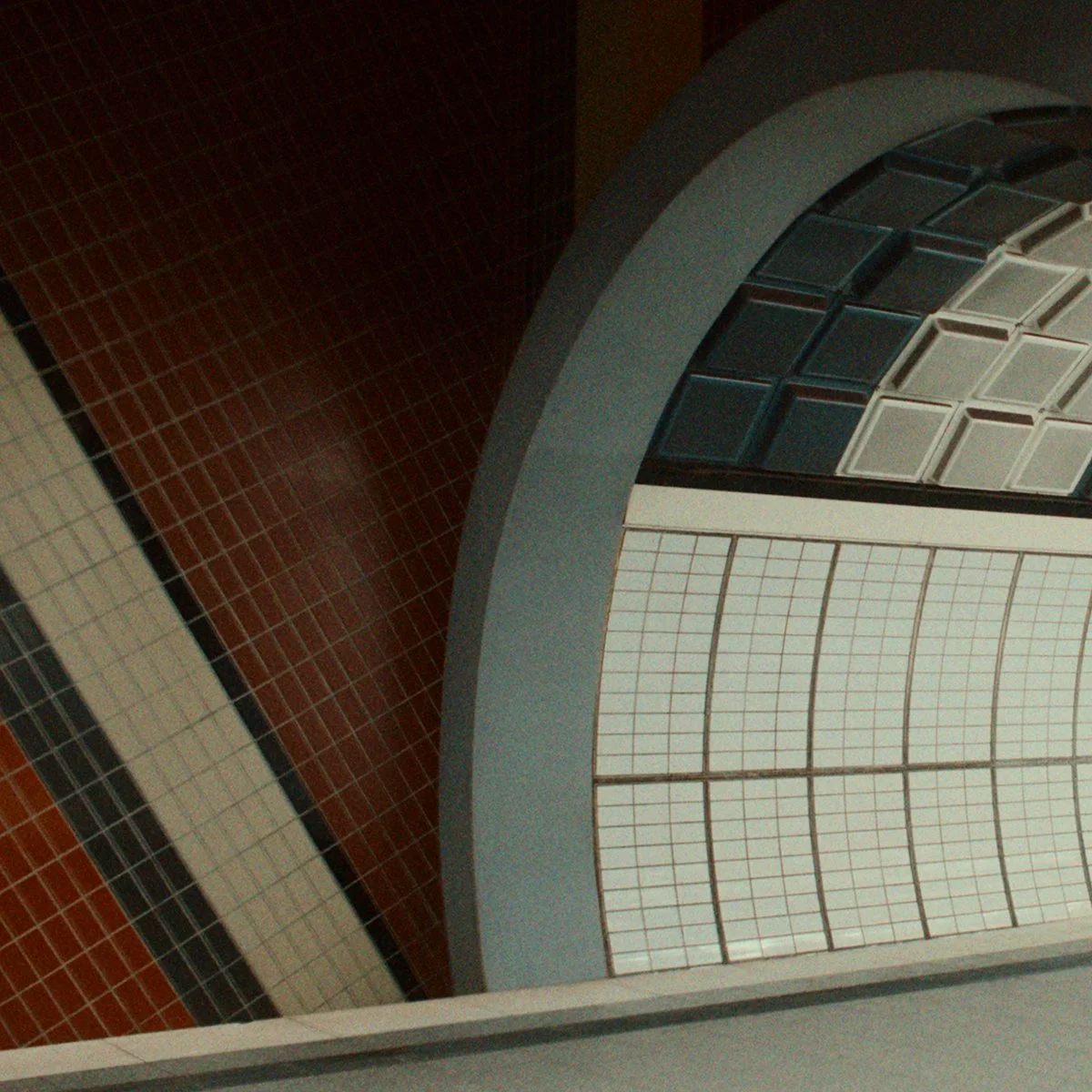
GDC: Space can be physical or emotional. A room can be built with frequencies, with depth and height, with density or transparency. When I compose, I imagine where the sound lives, not geographically, but architecturally.
BI: Do you think of your tracks as environments then, or architectures for listeners to enter?
GDC: Yes. Each track is an environment, a small architecture where listeners can wander and create their own meaning.

BI: When I last spoke with Powell (Diagonal Records), he said he doesn’t keep spaces in mind when creating music. How does ‘setting’ influence the way you craft and design music? And how do spaces like Piazza Castello in Milan, and OHG Hamburg now inform your perspective on the contexts in which your music can be heard and experienced?
GDC: Setting shapes the palette. A city, a room, or even a moment of silence affects the tones I’m drawn to. The experience of presenting music at the JIL SANDER Spring/Summer 2026 fashion show held at their headquarters in Piazza Castello, or the event they held in Hamburg expanded this. These spaces showed me how sound behaves when it interacts with light, materials, and movement.
BI: Your collaboration with JIL SANDER led to the EP JS, created alongside Simone Bellotti’s first season for the house and presented in the visual and runway world around that collection. How did this collaboration begin? What was it about the brand and the team that made it possible for you to create music with them in such a meaningful way?
GDC: It started from conversations about atmosphere. JIL SANDER’s Creative Director Simone Bellotti wanted music that could express the idea of transition, between motion and stillness. We quickly realised we shared a similar sensitivity to reduction, clarity, and emotion.


BI: What does it mean to you to be the earliest musical collaborator to be appointed in this new era of JIL SANDER?
GDC: It’s an honour. Music was Simone Bellotti’s first creative gesture at the House, so contributing to that foundation felt meaningful. It established the tone for everything that followed.
BI: Working on JS, and seeing your music aligned with the visual language and atmosphere of the collection, what did that experience reveal to you about your own work?
GDC: Hearing my music inside a world of materials, silhouettes, and movement made me aware of its physicality. I realised how much my work relies on lightness, on air, almost like architecture made of sound.
BI: So when your music is created to exist alongside materials, shapes, and movement, especially in a runway or presentation context, does it change how you think about composition or structure?
GDC: It changes your awareness. You compose not just for listening, but for walking, breathing, and looking. You’re designing atmosphere.
BI: Hearing your work in the context of luxury fashion and runway culture, in that particular JIL SANDER environment, what did it show you about the music itself?
GDC: It showed me music’s ability to hold presence without feeling overwhelming. Its character felt refined, quiet, and confident, aligned with JIL SANDER’s own language.
BI: Today your work lives across official releases, YouTube videos, archives and more. I think I first discovered your music on YouTube, through an upload of “GTE”. How do you feel about this kind of digital circulation to reach audiences?
GDC: I see it as part of the life of the work. Music finds its own path. Sometimes someone discovering a 20-year-old track on YouTube at 3 a.m. creates the most intimate connection.
BI: And that is exactly how I discovered your music, funnily enough. So does the way music now travels, algorithmically and informally, influence how you think about releasing new work?
GDC: Not directly, but I’m aware of how fluid circulation is now. It reminds me to focus on authenticity rather than format.
BI: How does this compare to the more curated, label-driven world you entered during the Rephlex years? And does the release of JS on vinyl feel in some way like a return to that?
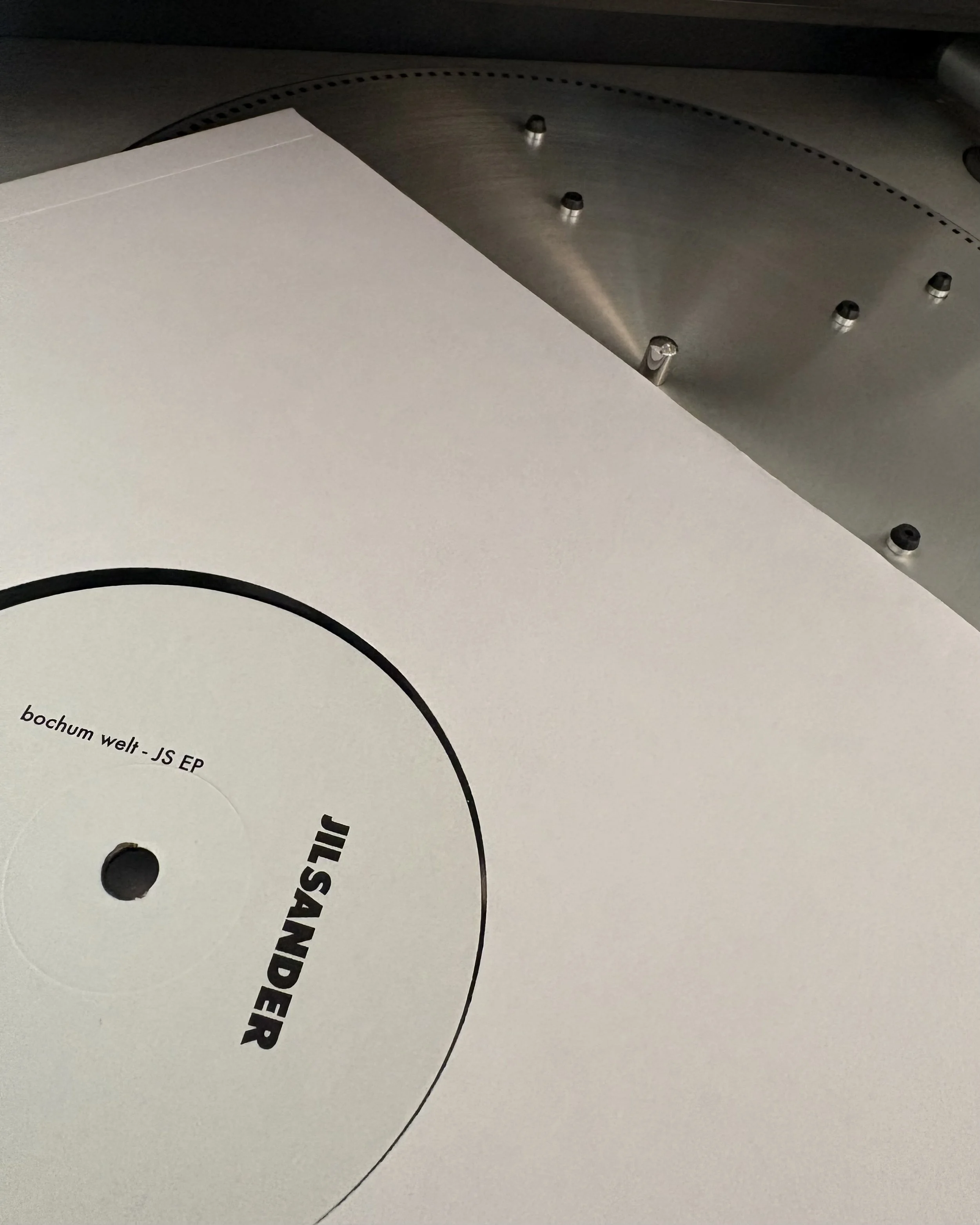
GDC: Rephlex was curated, personal, and deeply human. It was a unique atmosphere I was lucky to experience closely. The vinyl release of JS in collaboration with JIL SANDER does echo that era: an object, a craft, a slower way of listening.
BI: To me, your music feels simultaneously reflective and forward-looking. How do you think about time as a material in your work?
GDC: Time is a material. It can be stretched, compressed, folded. A piece can feel like a memory or like a projection into the future. I enjoy that ambiguity.
BI: If Time is a material. Then what role does Emotion play in your decisions when composing, whether consciously or intuitively?
GDC: Emotion guides, but structure shapes. I believe emotion is more powerful when it’s understated.
BI: So is there a thought, a perspective, or an attitude that has stayed with you throughout your artistic life?
GDC: To remain curious, and to trust the small gestures. They often carry the deepest meaning.
BI: What feels creatively exciting to you, right now?
GDC: Exploring the meeting points of sound, architecture, and minimal design. Creating spaces rather than tracks.
BI: And how do you imagine Bochum Welt evolving in the next few years in sound or direction?
GDC: More transparency, more light, more detail. A clearer voice, but still intimate.
BI: Is there something you hope your listeners will pay particular attention to?
GDC: The small movements, the breaths of silence, the textures that appear only once. Those are the emotional anchors.
BI: What projects would you like to realise in the future?
GDC: I’d live to do sound works created specifically for spaces and products, real or imaginary. I’d also like to continue releasing music, exploring this balance between intimacy and structure in new ways.
- End -
Bochum Welt’s JS is available to download now, and buy on vinyl from JIL SANDER.
With special thanks to Gianluigi Di Costanzo and JIL SANDER
Creative Director: Simone Bellotti
Art Director: Christopher Simmonds
Video Director: Sean Vegezzi
Original Music: Bochum Welt
Music Supervisor: Ruggero Pietromarchi
Casting: Ben Grimes
Styling: Charlotte Collet
Brand Image: Matthieu da Rocha
Hair: Ramona Eschbach
Make Up: Stephanie Kunz
Models: Pauline Schubach, Lauren Huyskens, Colin Otto, Ojo